
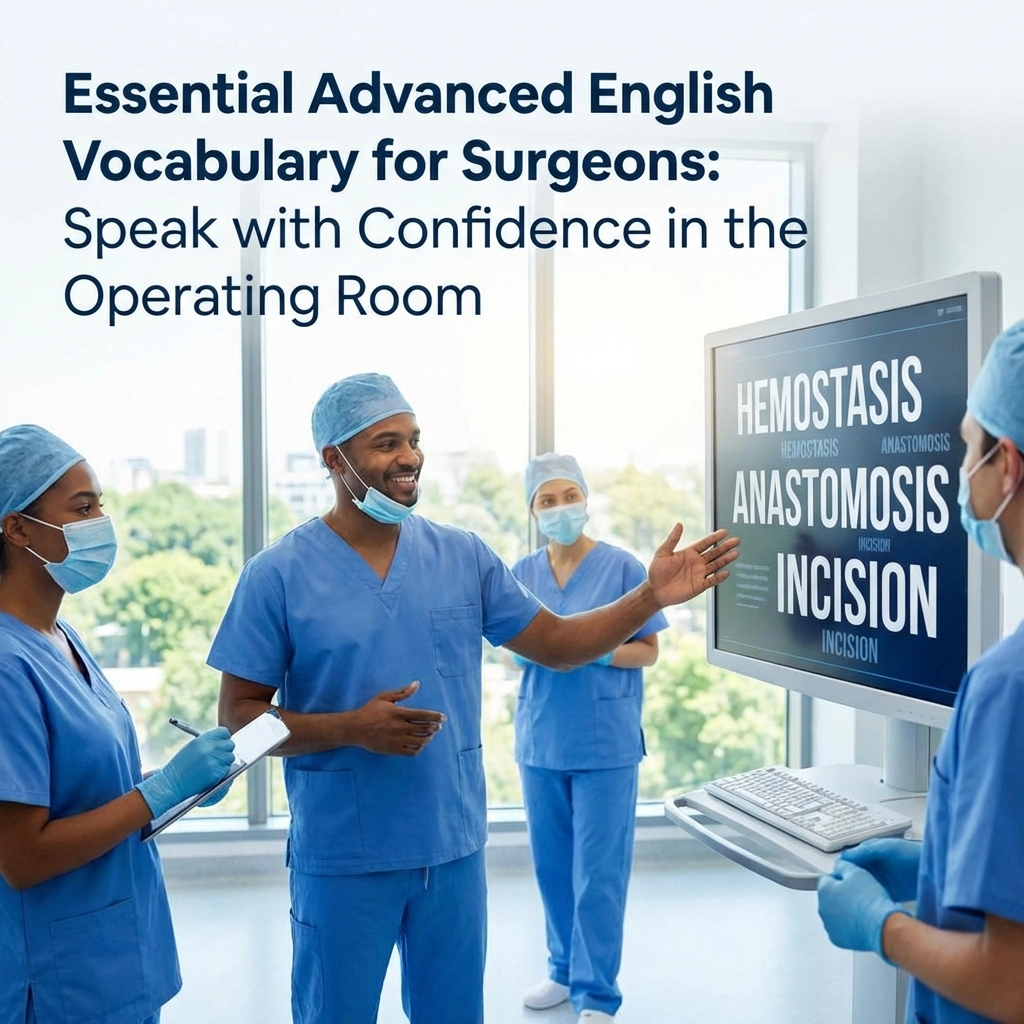
As a surgeon working in an English-speaking environment, your vocabulary needs to be precise, professional, and immediately understood by your entire surgical team. Clear communication can literally save lives.
Let me help you master the essential vocabulary that will make you sound confident and competent in any operating room.
Surgical Team Communication
Understanding your team members and their roles is the foundation of effective OR communication.
Anesthesiologist: The doctor who manages patient's pain and consciousness during surgery.
Example: "Please ask the anesthesiologist about the patient's blood pressure."
Circulating Nurse: The nurse who manages the sterile field and assists with non-sterile activities.
Example: "The circulating nurse will document our procedure times."
Scrub Nurse: The sterile nurse who directly assists the surgeon with instruments.
Example: "Scrub nurse, I need a 10-blade scalpel."
Surgical Technologist: The team member who prepares and maintains surgical instruments.
Example: "The surgical technologist has prepared all the orthopedic instruments."
Radiologist: The doctor who interprets medical imaging studies.
Example: "The radiologist confirmed the tumor location on the CT scan."

Medical Procedures and Techniques
These terms describe the actions and methods you'll use every day in surgery.
Incision: A surgical cut made in the skin or tissue.
Example: "I'm making a midline incision."
Anastomosis: Connecting two tubular structures surgically.
Example: "The bowel anastomosis is healing well."
Resection: Surgical removal of tissue or organ.
Example: "We performed a liver resection yesterday."
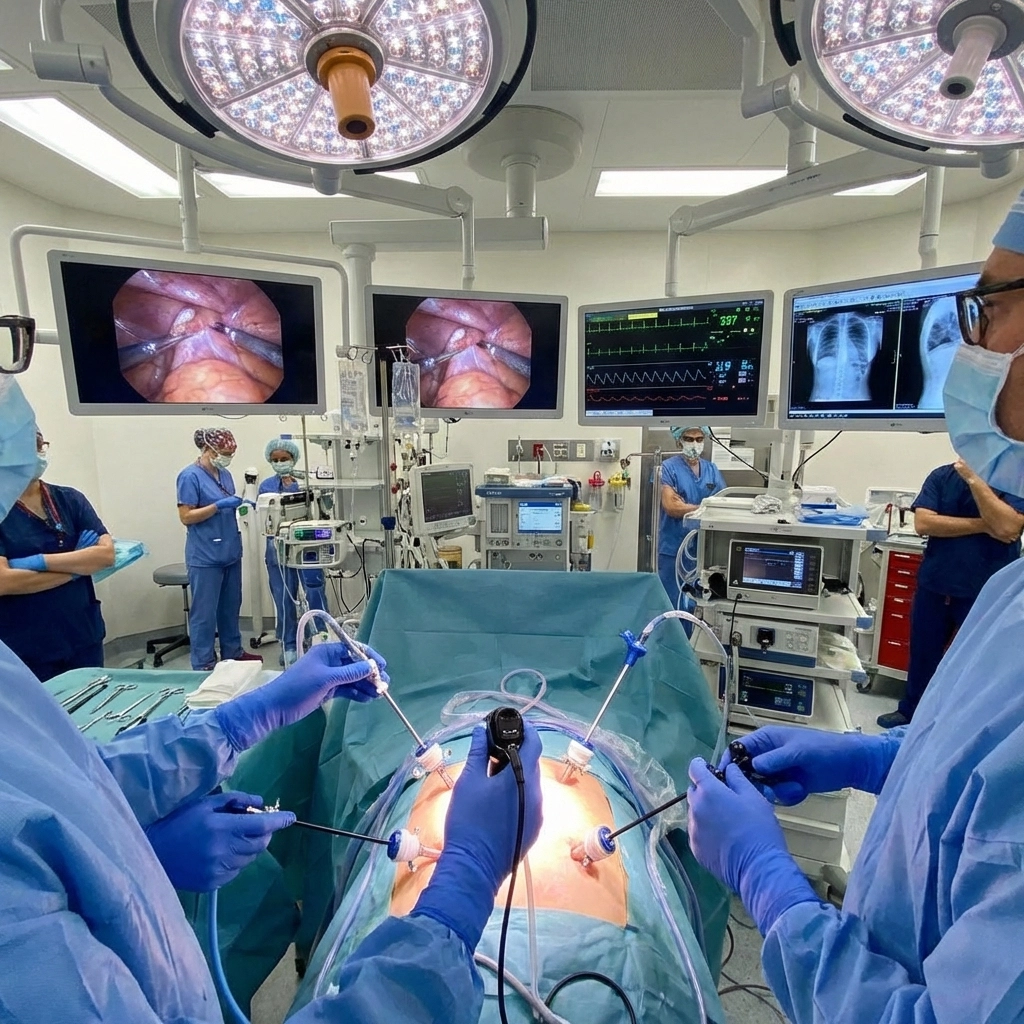
Laparoscopic: Minimally invasive surgery using small incisions and a camera.
Example: "This patient is a good candidate for laparoscopic surgery."
Debridement: Removal of dead or damaged tissue.
Example: "The wound requires thorough debridement."
Hemostasis: The process of stopping bleeding.
Example: "Achieving hemostasis is critical before closure."
Suture: To stitch tissue together with surgical thread.
Example: "Please suture the fascia layer carefully."
Anatomy and Body Systems
Precise anatomical language prevents miscommunication during procedures.
Anterior/Posterior: Front/back of the body.
Example: "The tumor is located on the anterior wall."
Medial/Lateral: Toward/away from the body's midline.
Example: "Make the incision two centimeters medial to the scar."
Proximal/Distal: Closer to/farther from the body's center.
Example: "The fracture is in the distal third of the femur."
Supine/Prone: Lying face up/face down.
Example: "Position the patient supine for abdominal surgery."
Fascia: The connective tissue covering muscles.
Example: "I can see the fascia layer clearly."
Peritoneum: The membrane lining the abdominal cavity.
Example: "We need to close the peritoneum separately."
Operating Room Equipment
Knowing equipment names ensures smooth communication with your team.
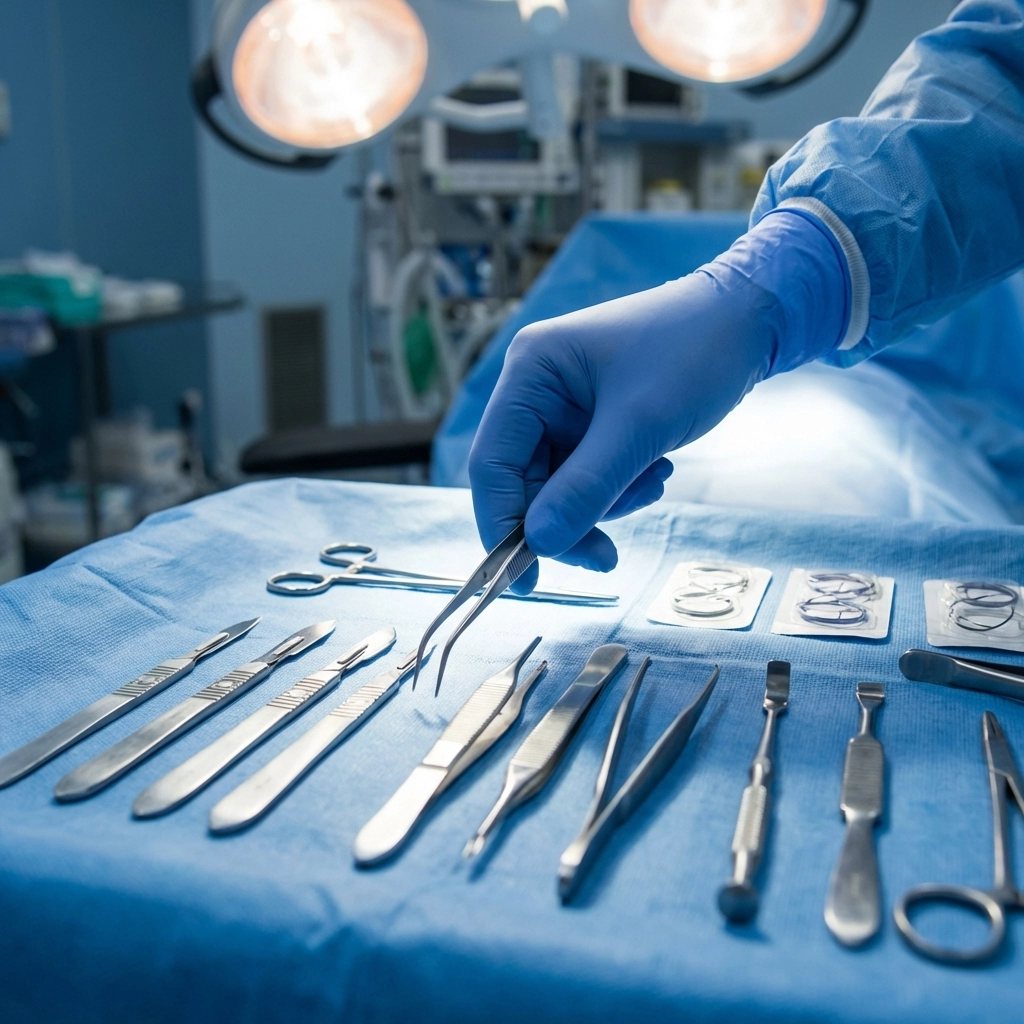
Electrocautery: Device that uses electrical current to cut tissue and stop bleeding.
Example: "Hand me the electrocautery for this bleeder."
Retractor: Instrument used to hold back tissue or organs.
Example: "Use the self-retaining retractor here."
Forceps: Grasping instruments for holding tissue.
Example: "I need fine forceps for this delicate dissection."
Trocar: Sharp instrument used to puncture body cavities.
Example: "Insert the trocar at the umbilicus."
Irrigation: Washing or flushing with sterile fluid.
Example: "Provide continuous irrigation during the procedure."
Specimen: Tissue sample removed for examination.
Example: "Send this specimen to pathology immediately."
C-arm: Mobile X-ray machine used during surgery.
Example: "Position the C-arm over the surgical site."
Emergency Situations
In emergencies, clear and quick communication saves lives.
Code Blue: Medical emergency requiring immediate resuscitation.
Example: "Call a code blue to the OR immediately."
Stat: Medical abbreviation meaning immediately.
Example: "We need blood work stat."
Hemorrhage: Severe bleeding.
Example: "The patient is experiencing massive hemorrhage."
Hypotension: Abnormally low blood pressure.
Example: "The patient is showing signs of hypotension."
Tachycardia: Abnormally fast heart rate.
Example: "Monitor for tachycardia during the procedure."
Complication: An unexpected problem during surgery.
Example: "We encountered a vascular complication."
Professional Communication Phrases
These phrases help you communicate clearly and professionally with your team.
"What's the time out?": Verification process before surgery begins.
Example: "Let's do our time out before we start."
"Prep and drape": Cleaning and covering the surgical site.
Example: "Please prep and drape the right knee."
"Sharp!": Warning when handling sharp instruments.
Example: "Sharp scalpel coming your way!"
"Counts are correct": Confirmation that all instruments and sponges are accounted for.
Example: "Final counts are correct, we can close."
"Ready to close": Indicating the procedure is nearly finished.
Example: "We're ready to close in layers."
"Post-op orders": Instructions for patient care after surgery.
Example: "I'll write the post-op orders now."
Medical Abbreviations You Must Know
OR: Operating Room
Example: "The patient is going to OR 3."
ICU: Intensive Care Unit
Example: "Transfer the patient to ICU post-operatively."
NPO: Nothing by mouth (from Latin "nil per os")
Example: "Keep the patient NPO after midnight."
EKG/ECG: Electrocardiogram
Example: "Order a pre-operative EKG."
CBC: Complete Blood Count
Example: "Check the CBC before surgery."
IV: Intravenous
Example: "Start two large-bore IVs."
Communication During Different Surgical Phases
Pre-operative: Before surgery begins
"Review the imaging studies with me."
"Confirm the surgical site marking."
Intra-operative: During surgery
"I need better visualization here."
"Can you improve the retraction?"
Post-operative: After surgery
"The patient tolerated the procedure well."
"Monitor drain output closely."
Building Confidence in Surgical Communication
Speaking confidently in English during surgery requires practice and preparation. Here are my recommendations:
Practice key phrases daily: Spend 10 minutes each morning reviewing common surgical vocabulary.
Listen actively: Pay attention to how native English-speaking surgeons communicate during procedures.
Use precise language: Avoid ambiguous terms. Say exactly what you mean.
Ask for clarification: If you don't understand something, ask immediately. Patient safety depends on clear communication.
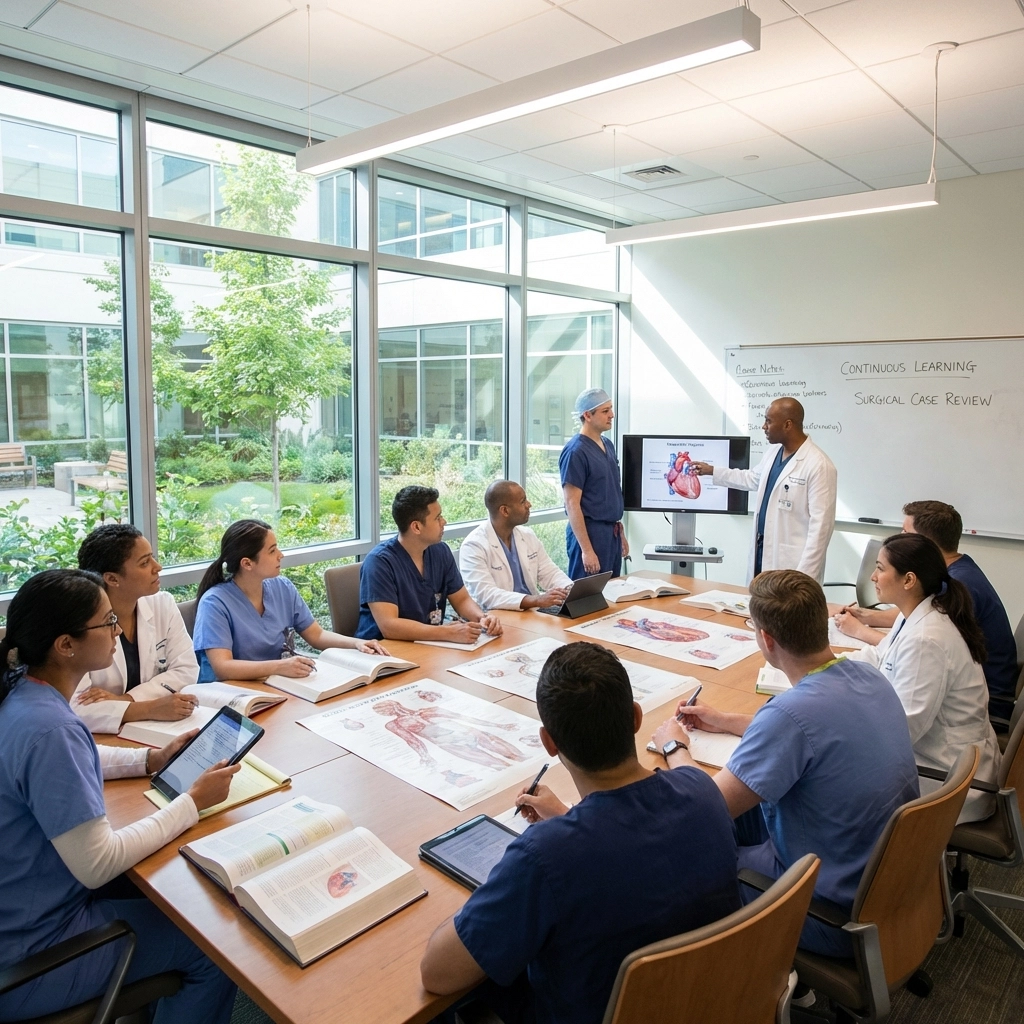
Join study groups: Practice surgical scenarios with other international surgeons.
The vocabulary in this guide covers the essential terms you need for confident surgical communication. Focus on the words most relevant to your specialty first, then expand your knowledge gradually.
Remember, your medical expertise is already strong. Now you're simply adding the English vocabulary to express that expertise clearly and professionally.
Keep practicing these terms in context, and soon you'll communicate as confidently in English as you operate. Your patients and colleagues will notice the difference.