
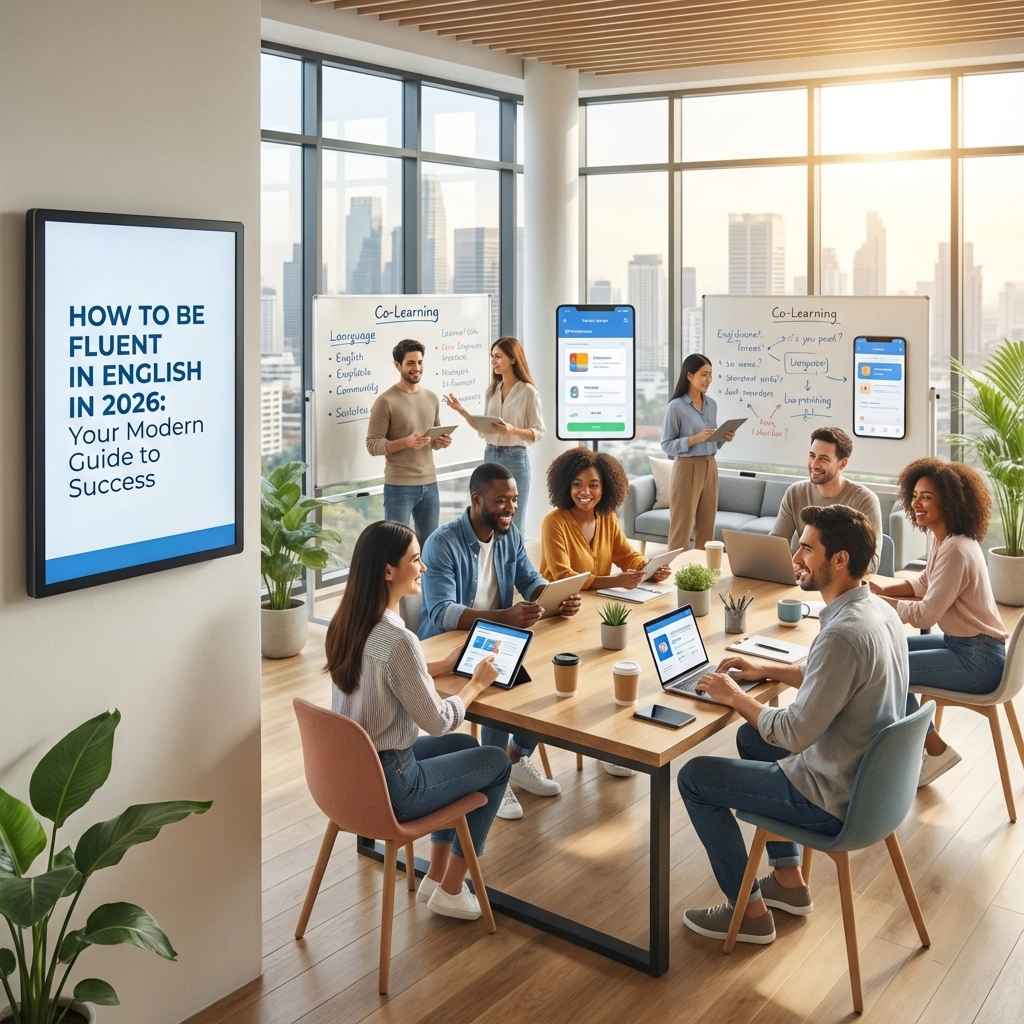
We're just days away from 2026, and if English fluency is on your resolution list, you're in the right place. This year brings exciting new approaches that make fluency more achievable than ever before.
Forget the old-school methods of endless grammar drills and vocabulary lists. In my experience working with thousands of English learners, the most successful students in 2026 are those who embrace modern, personalized strategies that actually fit into their busy lives.
Let's explore the proven methods that will transform your English journey this year.
Why 2026 is Different for English Learners
The landscape of language learning has completely shifted. We now have AI tools that provide instant feedback, communities that connect learners worldwide, and micro-learning techniques that deliver results in just minutes per day.
What excites me most is how these innovations remove the traditional barriers that kept learners stuck for years. No more wondering what to study next or feeling overwhelmed by massive textbooks.
The key is consistency through smart, strategic practice rather than lengthy study sessions.
Embrace AI as Your Personal English Coach
AI personalization has become the foundation of effective English learning in 2026. Instead of generic lessons, AI creates intelligent, micro-tasks tailored specifically to your goals, learning style, and schedule.
Here's how to build this into your daily routine:
Morning routine (5 minutes):
- Quick AI quiz on yesterday's vocabulary
- Voice pronunciation check with instant feedback
Afternoon break (3 minutes):
- One short writing task with AI corrections
- Grammar question answered in context
Evening wind-down (2 minutes):
- Record a 30-second voice note about your day
- Review AI suggestions for improvement
This approach removes decision fatigue while maintaining the consistency that accelerates fluency. I've seen learners make more progress in three months with AI guidance than in years of traditional study.

Master the Micro-Practice Revolution
Micro-practice is transforming how we approach language learning. Instead of blocking out hours for study, you scatter small English tasks throughout your day.
The 15-minute daily pattern:
- Listen to 3 minutes of English during your commute
- Write a short English message at lunch
- Ask one grammar question in the afternoon
- Read one paragraph before bed
These tiny actions create enormous progress because your brain stays active without feeling overwhelmed. This works exceptionally well for busy professionals who struggle with traditional schedules.
Many of my students tell me this approach feels effortless compared to sitting down for hour-long study sessions. The secret is that your brain processes language better with frequent, short exposures.
Use Visual Learning to Make English Stick
Visual learning accelerates comprehension and memory retention far better than text alone. Modern learners absorb more information with less effort when images are involved.
Practical visual techniques:
- Save infographics showing idioms and phrasal verbs
- Create mini mind-maps for vocabulary groups
- Use images to explain new phrases
- Add visual notes to your learning system
For example, instead of memorizing "to break the ice" through repetition, save an image of people cracking a block of ice. You'll retain it permanently because your brain connects the visual with the meaning.
I encourage all my students to think in pictures whenever possible. It's one of the fastest ways to move vocabulary from short-term to long-term memory.

Build Your English Second-Brain System
A second-brain system treats your learning materials as an organized, digital knowledge base rather than scattered notes and forgotten screenshots. Your brain shouldn't store 200 phrasal verbs – that's what systems are for.
Structure your second brain with:
- Organized vocabulary groups with real examples
- Saved images and infographics
- Grammar explanations in context
- Real-world phrases you've encountered
- Personal recordings of your speaking practice
This creates clarity, structure, and momentum in your learning journey. When you need to recall something, you know exactly where to find it.
Many teachers find that students with organized systems progress 50% faster than those with chaotic notes. The time you invest in organization pays massive dividends in learning speed.
Prioritize Speaking From Day One
The most significant mindset shift in 2026 is prioritizing speaking early and often, rather than waiting until you've mastered grammar. Modern language learning proves that speaking from the beginning accelerates overall fluency.
This approach removes mental blocks and overthinking that keep learners stuck for years. Instead of viewing speaking as something you "earn later," treat it as your primary goal from the start.
Daily speaking practice ideas:
- Record yourself describing your morning routine
- Practice ordering food in English (even at home)
- Use AI tools for conversation simulation
- Join online speaking clubs in our community
Speaking builds confidence faster than any other skill. Even if you make mistakes, you're training your mouth and brain to work together in English.

Create Your Strategic 2026 Timeline
To maintain momentum through the year, implement a quarterly approach that builds systematically toward fluency.
Quarter 1 (January – March): Foundation Building
- Establish your consistent daily practice routine
- Build core vocabulary for your specific needs
- Master essential grammar patterns in context
Quarter 2 (April – June): Conversational Breakthrough
- Advance to conversational fluency through daily speaking
- Start using English in real-world contexts
- Join language exchange partnerships
Quarter 3 (July – September): Real-World Integration
- Practice English in professional settings
- Consume native-level content confidently
- Handle complex conversations with ease
Quarter 4 (October – December): Fluency Mastery
- Express complex ideas naturally
- Understand cultural nuances and humor
- Help other learners in their journey
This timeline keeps you motivated with clear milestones while ensuring steady progress toward true fluency.
Transform Your Environment Into English Immersion
You don't need to move to an English-speaking country to create immersion. Transform your daily life into a language laboratory.
Immersion strategies:
- Change your phone's language to English
- Listen to English podcasts during workouts
- Watch English content with English subtitles
- Think in English during daily activities
- Attend virtual events in English-speaking communities
The goal is surrounding yourself with English input throughout the day. Even five minutes here and there adds up to hours of exposure weekly.
In my experience, students who create home immersion environments reach conversational fluency months faster than those who only study during designated times.
Join a Learning Community for Accountability
Language learning thrives in community environments. When you surround yourself with other motivated learners, you stay accountable and motivated through challenging periods.
Benefits of community learning:
- Regular speaking practice with peers
- Motivation from others' success stories
- Support during difficult learning phases
- Cultural exchange and friendship building
- Access to native speakers and advanced learners
The most successful English learners I know are those who found their learning tribe early in their journey. They celebrate victories together and support each other through challenges.
Choose Your Learning Format Wisely
Decide between private lessons, group classes, or self-study based on your schedule, learning style, and specific goals. Each format has distinct advantages.
Private lessons work best for:
- Busy professionals with irregular schedules
- Learners with specific professional needs
- Students who prefer personalized attention
Group classes excel for:
- Building confidence through peer interaction
- Learning cultural nuances through discussion
- Maintaining motivation through community support
Self-study suits:
- Highly disciplined learners
- Those with tight budgets
- Students who learn best at their own pace
Don't wait for the perfect moment to start. Choose your format and schedule your first session before motivation fades.
Your Action Plan for English Fluency in 2026
Success comes from consistent daily action rather than perfect planning. Here's your immediate next steps:
- This week: Set up your AI learning tools and create your second-brain system
- Next week: Establish your micro-practice routine and join our learning community
- This month: Begin daily speaking practice and connect with conversation partners
- Next month: Evaluate your progress and adjust your approach based on results
Remember, fluency is a journey of small, consistent improvements rather than dramatic breakthroughs. Each day you practice, you're building neural pathways that make English more natural and automatic.
The pathway to fluency in 2026 isn't about endless memorization or rigid study schedules. It's about smart personalization, frequent micro-practice, visual reinforcement, organized systems, and speaking from day one.
Your English fluency journey starts today, not tomorrow. Take that first small step, and let consistency work its magic throughout 2026.