

Working as cabin crew requires more than just a friendly smile and safety knowledge. You need to communicate clearly and confidently in English with passengers from around the world, coordinate with your team, and handle everything from routine service to emergency situations.
In my experience working with aviation professionals, I've seen how the right vocabulary can transform your confidence levels. Whether you're new to the industry or looking to polish your English skills, mastering these essential terms and phrases will help you excel in your role.
Let's explore the vocabulary you need to speak English confidently both onboard and on the ground.
Essential Pre-Flight and Boarding Vocabulary
Before passengers even step onboard, you'll need specific terminology for boarding procedures and pre-flight preparations.
Pre-board means allowing certain passengers to board first, typically those requiring special assistance or families with young children. When you announce "We will now begin pre-boarding for passengers requiring extra time," you're setting a professional tone from the start.
The passenger manifest is your complete list of passengers and their seat assignments. You'll refer to this throughout the flight, especially when dealing with unaccompanied minors (UM) – children traveling alone who need extra attention.
Final and immediate boarding call signals the last opportunity for passengers to board. This phrase creates urgency without causing panic: "This is the final and immediate boarding call for Flight 247 to London."
Your galley is the onboard kitchen area where you'll prepare and serve meals. Knowing this term helps when coordinating with colleagues: "I'll restock the galley while you assist passengers with their luggage."
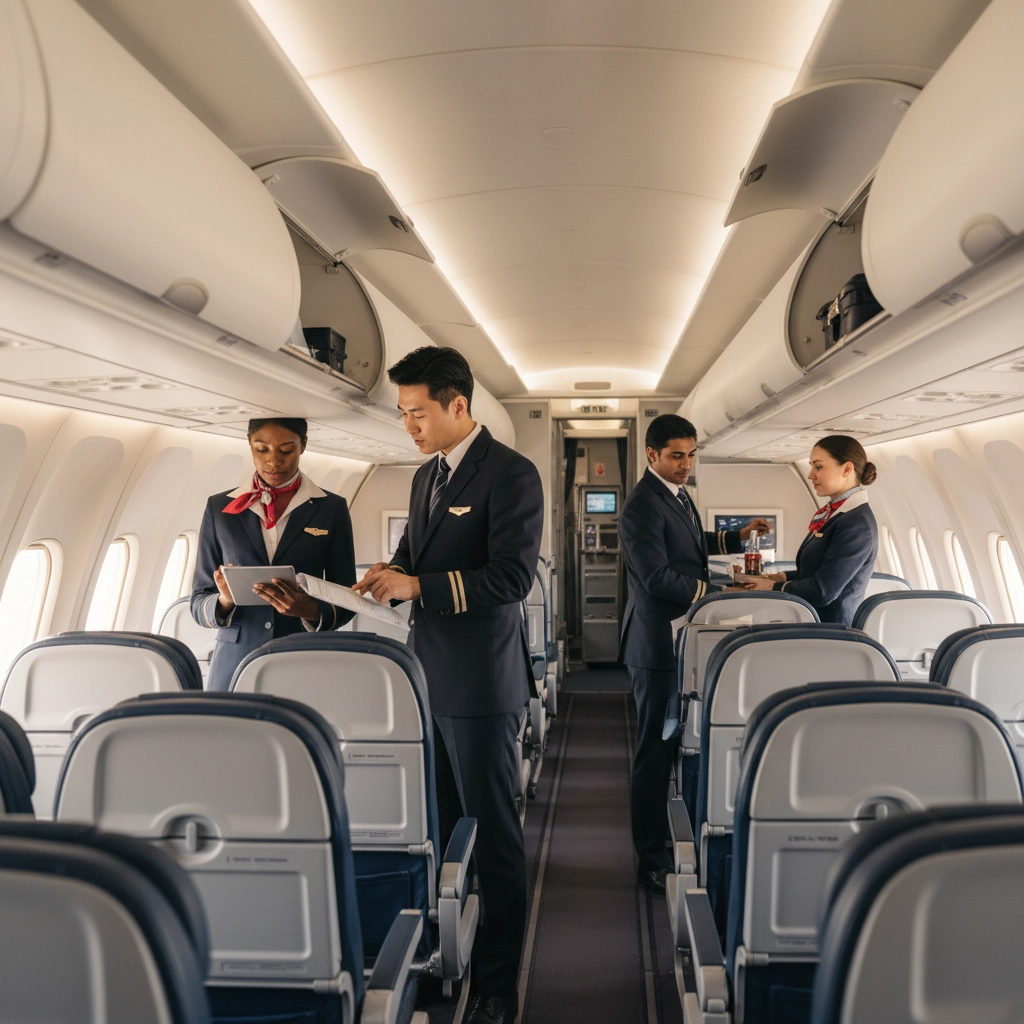
In-Flight Service and Passenger Interaction
Once airborne, clear communication becomes even more critical. Here are the phrases you'll use most frequently when serving passengers.
Greeting and welcoming passengers:
- "Welcome aboard Flight 185 to Tokyo"
- "Good morning and thank you for flying with us today"
- "I'm Sarah, and I'll be taking care of you during today's flight"
Offering services:
- "Would you like tea, coffee, or juice with your meal?"
- "Can I offer you a blanket or pillow for your comfort?"
- "Would you prefer the chicken or vegetarian option?"
- "I'll be back with your drink in just a moment"
Providing information:
- "We'll be serving lunch in approximately thirty minutes"
- "Our estimated time of arrival (ETA) in Paris is 2:30 PM local time"
- "We're currently experiencing some turbulence, so please remain seated"
- "The captain has turned on the seatbelt sign due to weather ahead"
Remember, passengers might ask about in-flight entertainment, Wi-Fi availability, or seat changes. Practice phrases like "I'll check what's available for you" or "Let me see if we can accommodate that request."
Safety and Emergency Communication
Safety vocabulary isn't just important – it's absolutely critical. You need to communicate clearly and calmly in any situation.
Routine safety instructions:
- "Please fasten your seatbelts and return your seats to the upright position"
- "Please ensure your tray tables are secured and your window shades are open"
- "Turn off all electronic devices or switch them to airplane mode"
- "Place your carry-on luggage completely under the seat in front of you"
Emergency procedures:
The pre-flight safety demonstration is mandatory before takeoff. During this time, explain emergency exits, life vest locations, and oxygen mask procedures using clear, simple English.
If medical emergencies arise, you might need CPR (Cardiopulmonary Resuscitation) skills or the onboard defibrillator. Practice phrases like "Is there a doctor on board?" or "We need medical assistance immediately."
Turbulence management:
- "We're experiencing some rough air, so please remain seated"
- "Keep your seatbelts fastened even when the seatbelt sign is off"
- "This should only last a few minutes"
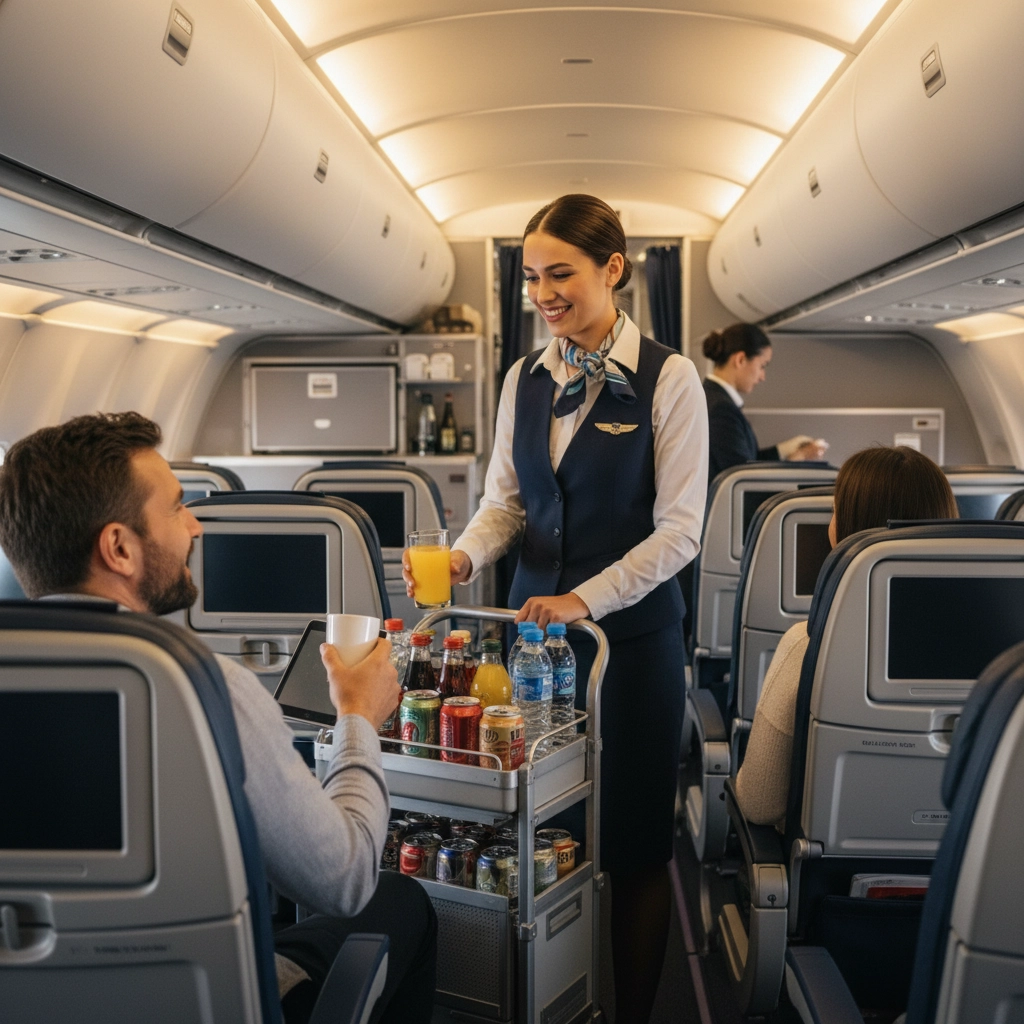
Ground Operations and Crew Communication
Your English skills matter just as much on the ground. You'll coordinate with ground crew, hotel staff, and other team members using specific aviation terminology.
Crew scheduling terms:
- Domicile or crew base is where you're assigned to work
- Layover refers to your scheduled rest time between flights
- RON (Remain Overnight) means you'll stay in a hotel between duties
- Show time is when you must report for duty
- Van time indicates when transportation picks you up from the hotel
Communication with colleagues:
- "I'll handle the forward galley while you take the aft section"
- "Can you assist the passenger in 12A with their special meal request?"
- "The captain wants to see the lead flight attendant in the cockpit"
- "We have a write-up for the broken reading light in row 15"
Understanding crew legalities helps you communicate about flight hours, rest periods, and duty time regulations with schedulers and supervisors.
Handling Passenger Concerns and Special Situations
Not every interaction will be routine. You need vocabulary for addressing concerns, complaints, and special requests professionally.
Addressing concerns:
- "I understand your frustration, and I want to help resolve this"
- "Let me check with my supervisor about your request"
- "I can see if we have any available seats that might be more comfortable"
- "Would you like me to speak with the captain about the delay?"
Special assistance:
- "I'll be happy to help you store your carry-on luggage"
- "Would you prefer an aisle seat for easier access to the restroom?"
- "I can arrange priority assistance when we land"
- "Let me get you some extra napkins and wet wipes"
Medical situations:
- "Are you feeling unwell? How can I help?"
- "We have a first aid kit if you need basic medical supplies"
- "Would you like me to ask if there's a medical professional on board?"
Professional Communication Tips for Cabin Crew
Beyond vocabulary, your tone and delivery matter enormously. Here's what I've learned about communicating effectively in the aviation industry.
Stay calm under pressure. Passengers pick up on your energy. If you speak confidently and calmly, they'll feel more secure, even during delays or turbulence.
Use simple, clear language. Avoid aviation jargon when speaking with passengers. Instead of saying "We're holding short of the runway," try "We're waiting for clearance to take off."
Be proactive in your communication. Don't wait for passengers to ask questions. Announce updates regularly: "Ladies and gentlemen, we're still on time for our arrival in Berlin at 4:15 PM."
Practice active listening. When passengers express concerns, repeat back what you've heard: "So you're worried about making your connecting flight in Amsterdam, is that correct?"
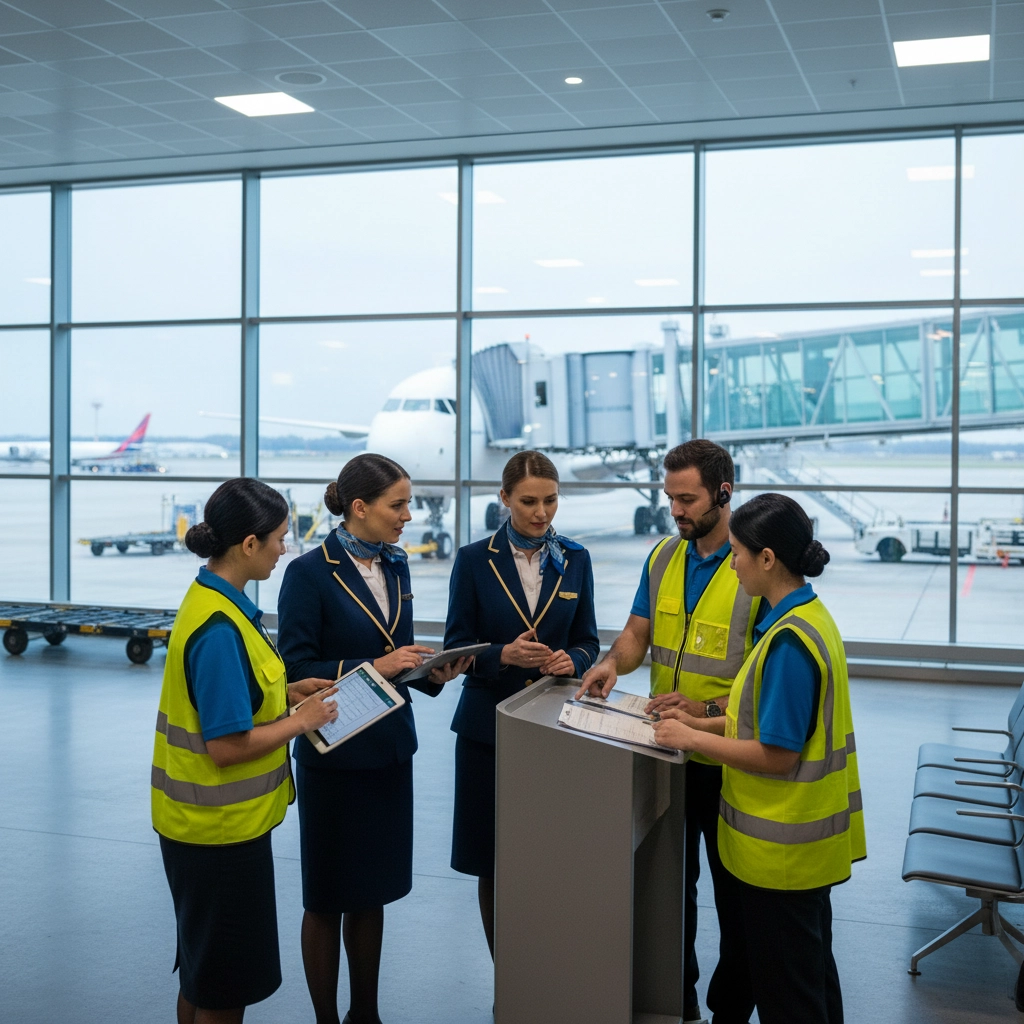
Building Your Confidence Through Practice
Mastering cabin crew English takes time and practice. Start by recording yourself giving safety announcements or practicing common passenger interactions. Listen back and note areas for improvement.
Role-play different scenarios with colleagues. Practice everything from routine meal service to handling medical emergencies. The more you practice these phrases, the more natural they'll become.
Many cabin crew members find it helpful to create flashcards with common phrases in English on one side and their native language on the other. Review these during downtime or layovers.
Advanced Vocabulary for Senior Cabin Crew
As you advance in your career, you'll need additional terminology for training new crew members and handling complex situations.
Training vocabulary:
- "Let me demonstrate the proper way to secure the galley"
- "Remember to check that all passengers have their seatbelts fastened"
- "During turbulence, we prioritize passenger safety over service"
Leadership communication:
- "I need everyone to focus on their assigned sections"
- "Let's debrief this flight and discuss what went well"
- "We'll need to adjust our service timing due to the delay"
Coordination phrases:
- "Ground crew is requesting a gate change"
- "Catering needs fifteen more minutes to complete boarding"
- "We're cleared for departure once the last passenger boards"
Your Path Forward
Remember, excellent English communication skills set great cabin crew members apart from good ones. Passengers notice when you speak clearly and confidently, and it enhances their entire travel experience.
Keep practicing these phrases until they become second nature. Join English conversation groups, watch aviation-related content in English, and don't be afraid to ask colleagues for feedback on your communication skills.
The aviation industry rewards those who communicate effectively. Your English skills directly impact passenger satisfaction, crew coordination, and most importantly, safety outcomes.
Stay committed to improving your English, and you'll find that confidence in the language translates to confidence in every aspect of your cabin crew role.